
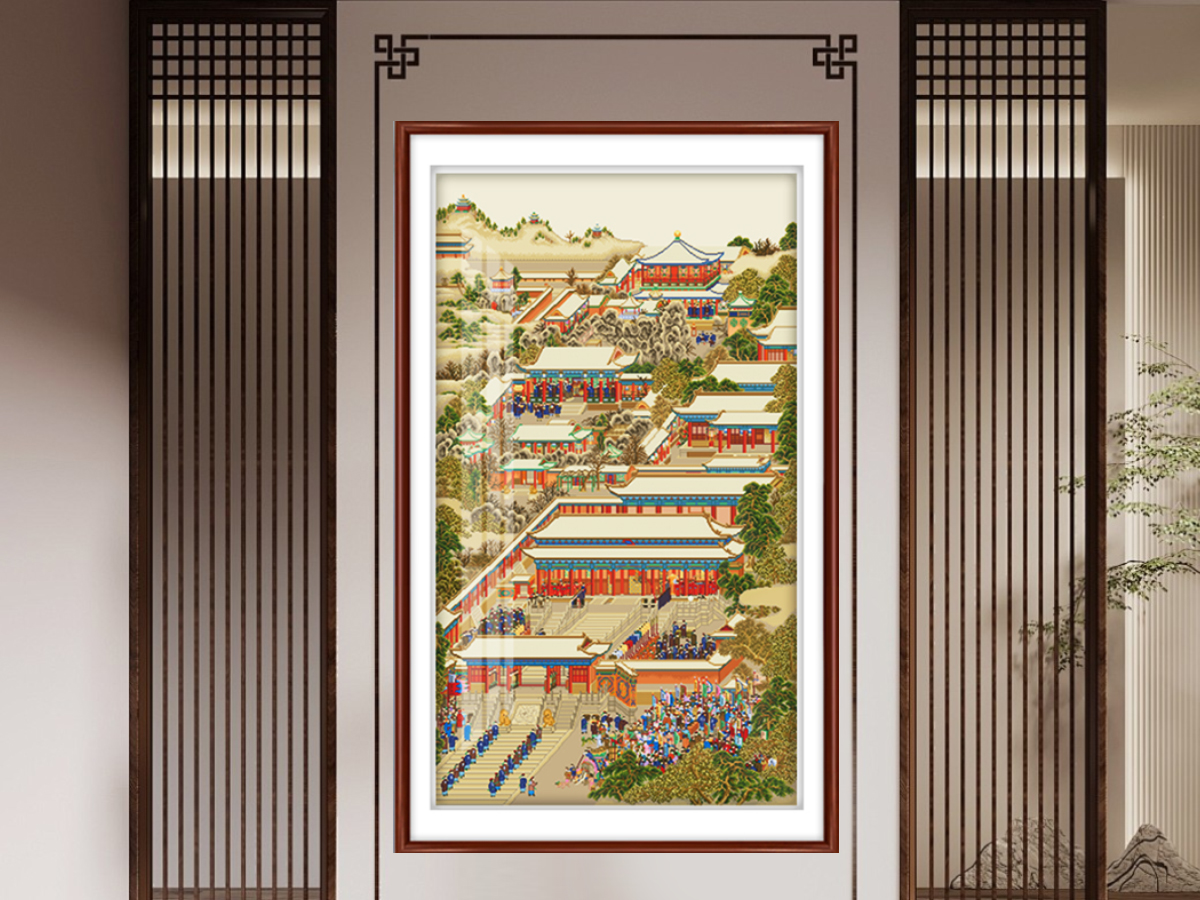
All Nations Coming to Court Cross Stitch is an invitation to recreate a moment of supreme historical drama and imperial magnificence. This design brings to life the celebrated Qing Dynasty court painting, All Nations Coming to Court (《万国来朝图》), a magnificent visual record of a grand diplomatic ceremony. Preserved today as a national treasure in the Forbidden City (Palace Museum) in Beijing, this artwork captures the pinnacle of Qing power and international prestige. By stitching this design, you are not just creating a busy historical scene; you are weaving a vivid narrative of imperial glory, cultural exchange, and a golden age in Chinese history.
A Visual Chronicle of Empire: The Painting’s Historical Significance
The original All Nations Coming to Court is a monumental work of historical narrative art. Created by anonymous court artists during the reign of the Qianlong Emperor (r. 1735-1796), it commemorates a specific, grand event: the arrival of foreign ambassadors and tribute missions from various nations and ethnic groups at the imperial court.
The painting is more than just a celebration of power; it is a meticulous historical document. It provides invaluable insight into:
- Qing Dynasty Diplomacy: It visually records the protocols, ceremonies, and hierarchical relationships of international relations during the empire’s zenith.
- Cultural Diversity: It depicts envoys and representatives in their distinctive traditional costumes, showcasing the vast reach and multicultural nature of the Qing Empire.
- Imperial Splendor: It serves as a detailed record of the Forbidden City’s ceremonial architecture and the sumptuous objects and gifts exchanged during such events.
A Scene of Supreme Authority: Decoding the Grand Ceremony
The composition of the painting is a masterpiece of hierarchical storytelling, designed to convey the supreme authority and central position of the Qing Emperor.
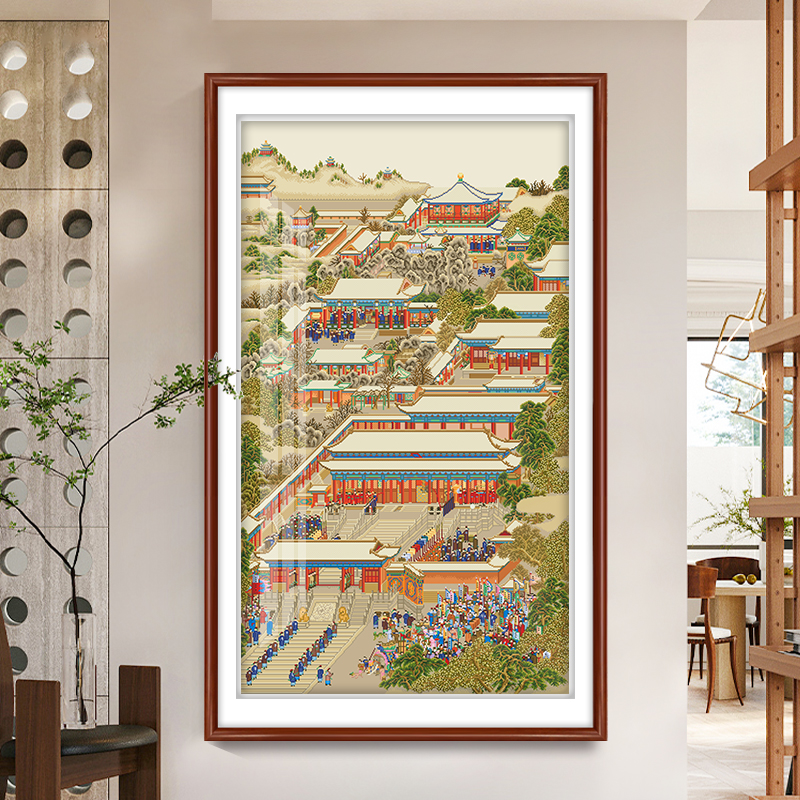
- The Focal Point: The Emperor and the Court: While the central figure of the Emperor is often represented by an empty, golden throne to show his divine and supreme status, the composition centers on the Taihe Gate (Gate of Supreme Harmony). All figures, from the foreign envoys to the court officials, are arranged in ordered ranks leading towards this symbolic center of power.
- The Envoys and Their Tributes: The painting is alive with hundreds of figures. Foreign envoys from various nations, identifiable by their distinctive clothing, are shown approaching the court. They are accompanied by exotic tributes and gifts, including elephants, horses, and precious items, symbolizing the wealth and global reach of the Qing Empire.
- Ritual and Ceremony: The scene is one of orderly, solemn ritual. The careful positioning of figures, the ceremonial objects, and the overall atmosphere convey a sense of supreme authority, peaceful submission, and the majestic power of the Son of Heaven.
- Architecture and Grandeur: The painting meticulously renders the imperial architecture of the Forbidden City. The grand gates, intricate roof details, and expansive courtyards serve as a magnificent stage for the diplomatic drama, reinforcing the power and stability of the empire.
A Masterpiece in Thread: Recreating Imperial Glory
Translating the grand scale, intricate detail, and solemn atmosphere of a Qing Dynasty court painting into cross-stitch is a significant artistic endeavor. Our design captures the essence of the original through:
- A Palette of Imperial Colors: Carefully selected threads replicate the painting’s rich, vibrant, and solemn hues. The deep reds and golden yellows of the palace architecture, the varied and exotic colors of the envoys’ robes, and the formal, ceremonial tones of the entire scene are all meticulously matched.
- Stitching for Detail and Grandeur: The pattern uses precise, varied stitches to capture the many layers of the composition. Dense stitching defines the architectural details and the multitude of figures, while careful shading creates a sense of depth and atmospheric perspective in the grand courtyards and distant architecture.
- Narrative Fidelity: The composition is carefully mapped, preserving the balanced, hierarchical arrangement of the original. The ordered ranks of the envoys, the focus on the Taihe Gate, and the overall sense of a solemn, magnificent ceremony are all recreated with care.
A Treasure of History, Art, and Cultural Pride
The All Nations Coming to Court Cross Stitch is a unique fusion of art, history, and personal engagement.
- A Connection to a National Treasure: This design offers a tangible link to one of the most important historical paintings in the Forbidden City. Stitching it allows you to engage directly with a pivotal moment in Qing Dynasty history.
- A Decorative Statement of Grandeur: The finished piece is a breathtaking and magnificent work of art. Its grand scale and rich detail make it an ideal centerpiece for a living room, study, or gallery, infusing the space with a sense of imperial elegance, historical depth, and majestic energy.
- A Meditative and Rewarding Journey: The detailed, engaging pattern offers a deeply focused and rewarding creative experience. As you stitch the multitude of figures and intricate architecture, you become immersed in the atmosphere of the ancient court.
- A Gift of Profound Meaning: This is a gift of exceptional thoughtfulness for a history enthusiast, an art collector, or anyone with a deep appreciation for Chinese culture and imperial heritage. It conveys a sense of respect for history and an understanding of cultural magnificence.
Stitching the Glory of an Empire
The All Nations Coming to Court Cross Stitch is an invitation to step onto the grand ceremonial grounds of the Forbidden City. It allows you to recreate a scene of supreme authority and global prestige, bringing the magnificent spirit of the Qing Dynasty’s golden age into your own home.
#AllNationsComingToCourtCrossStitch
#QingDynastyImperialArt
#ForbiddenCityPainting
#ChineseHistoricalEmbroidery
#ImperialCourtArtStitch#ChineseCulturalHeritageCrossStitch


Leave a Reply